

12 Vibe Coding Ideas That Actually Make Money in 2026 (With Real App Store Data)
Everyone Can Build Now. Almost Nobody Gets Paid. Most vibe coding ideas lists are inspiration porn: twenty projects you can finish this weekend, zero proof that anyone pays for them.
You've seen the pattern. You get an idea, you fire up Lovable or Bolt, you ship in two days. It works. It looks good. You post it. And then... nothing. Nobody downloads it. Nobody pays. You move on to the next idea.
Don't take my word for it — take the internet's. On an Ask HN thread full of impressive vibe coding projects, one developer of a legal-calendar app confessed: "Only a small handful of users! I'm a terrible marketer." Another top comment spotted the real problem: people mostly share their own projects instead of recommending tools they actually use — the software version of the IKEA effect. You built it, so you love it. The market didn't get a vote. In 2026, almost nobody reports serious revenue from vibe coded apps. The bottleneck isn't building anymore. It's picking.
So this isn't another list of vibe coding project ideas you can finish. It's a list of ideas with receipts. Each one points at a corner of the App Store where solo builders are already getting paid, with Appark's download and revenue estimates to prove it. If you've been wondering what to build with vibe coding, start here — and run the four-step check at the end before you write a single prompt.
How to Use This List (and How to Read the Numbers)
Every one of these vibe coding ideas follows the same five fields, so you can scan fast:
- The idea: one sentence, no fluff.
- Why now: the market signal that makes this window open.
- The data: real numbers from public app store charts.
- Difficulty: rated for one non-programmer with AI tools. "Easy" means beginner-friendly; these are honest vibe coding ideas for beginners, not "easy if you've shipped ten apps."
- Vibe code it with: the tool pairing that fits the job.
One rule about money, because this whole space runs on unverifiable claims: we label revenue two ways. Store chart estimates come from public app store data, visible download and revenue rankings anyone can check. Self-reported revenue means a founder said so on Reddit or a podcast, and we can't verify it. When another roundup of vibe coding examples warns that most income claims online are self-reported, and at least one got caught being faked, you can see why the split matters. Most lists stop at screenshots. The data field is the difference.
What Makes a Vibe Coding Idea Worth Building in 2026
Before the list, the filter. A vibe coding idea is worth your weekends when it passes three checks:
- Payment evidence. Someone, somewhere, already pays for a version of this. Competition isn't a red flag. It's proof of a wallet.
- Trend direction. The category's downloads or revenue are flat or up over the last six months. You're riding a wave, not draining a pool.
- One person, one AI, shippable. No real-time multiplayer, no paying out third parties, no licensed content. These are the three places where AI-generated code faceplants.
Here's how the four groups compare:
| Track | Build time | Monetization | Difficulty | Data signal to check |
|---|---|---|---|---|
| Single-purpose utility apps | A weekend | One-time fee or cheap subscription | Easy | Download long tail in the category |
| Vertical AI apps | 2–4 weeks | Weekly subscription | Medium | Top-grossing revenue + pricing |
| Simple games | 1–2 weeks | Ads or one-time | Medium | Download volume + retention |
| Local-business & home-cooked apps | Days | Client fee + monthly retainer | Easy | One real customer, checked by hand |
Want more candidates after this? We keep two more lists going: 10 mobile app ideas with data on each and a guide on how to find underserved app niches.
12 Vibe Coding Project Ideas That Make Money (With Real Data)
Four groups. Twelve vibe coding ideas, each with the five fields. If you're hunting ideas for vibe coding that actually pay, every group below leads with the market signal, not the shiny story.
Group A · Single-Purpose Utility Apps
This is the unbundling play, and it's the most reliable one on the board. App marketers like Steve Young, who walked through it on The Side Hustle Show, describe the core move: take one feature from a big, bloated app and sell it alone to the people who only wanted that. His math: roughly 10 downloads a day can clear $1,000 a month in the right niche. The vibe coding app ideas below run on that engine.
1. Niche file converter (JPEG → PDF, or one specific pair)
- The idea: An app that does exactly one conversion, fast, with zero setup. No document suite, no 40-button toolbar.
- Why now: The big converter apps keep stacking features to justify subscriptions. The person who just needs receipts turned into PDFs today is underserved by bloat.
- The data: Single-purpose converters like Photos PDF : Scanner Converter pull an estimated 13.8K downloads and $1K in monthly revenue on the App Store (plus 2.1K downloads and $1.1K on Google Play) — store chart estimates, October 2026.
- Difficulty: Easy.
- Vibe code it with: Lovable or Bolt for a web version; Replit if you want it packaged.
2. One-sound sleep app (green noise, brown noise, one specific sound)
- The idea: Not a "sleep sounds" app. A green noise app. One sound, one screen, a sleep timer. That's the whole product.
- Why now: Sleep-audio niches keep splitting into named sounds, and each new name creates a fresh keyword with weaker competition. A weather-layers app built by a solo dev hit 85K users in nine months with the same one-thing focus (self-reported, via Lenny's roundup).
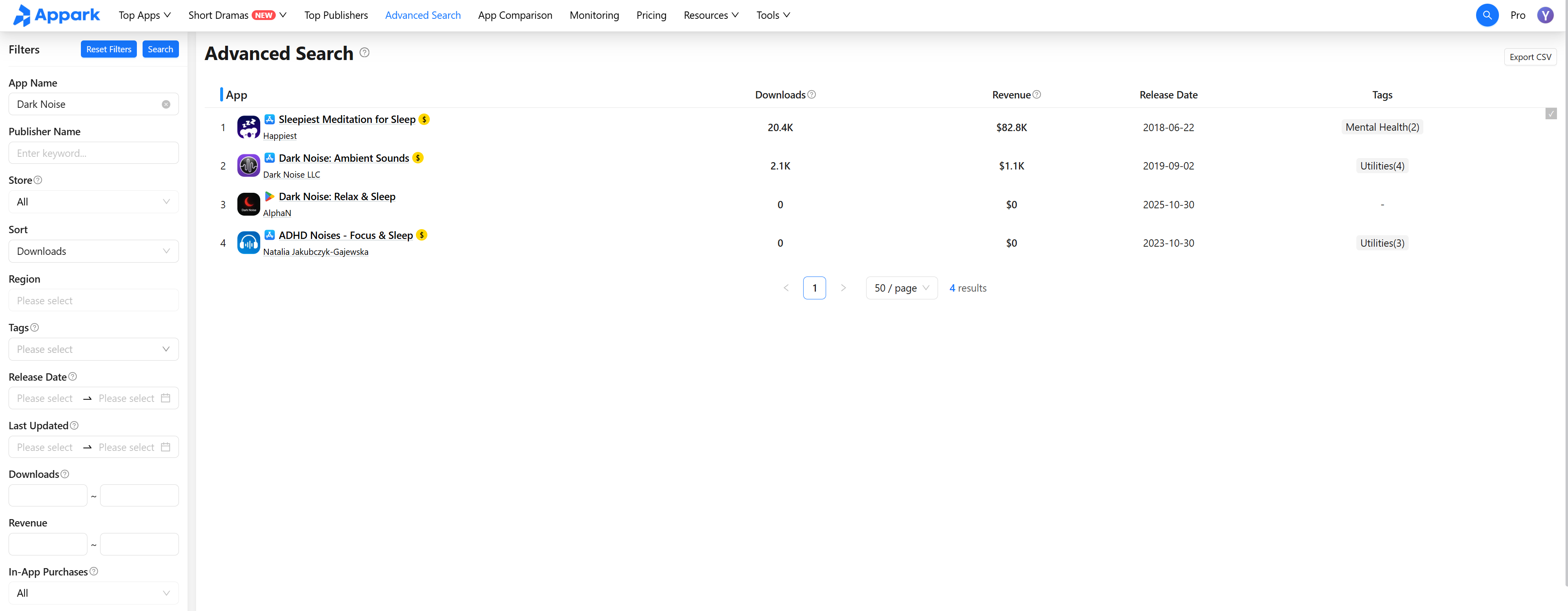
- The data: Focused indie ambient-sound apps like Dark Noise: Ambient Sounds pull an estimated 2.1K downloads and $1.1K a month on the App Store, while broader sleep-audio leaders like Sleepiest Meditation for Sleep reach 20.4K downloads and $82.8K a month — store chart estimates, October 2026.
- Difficulty: Easy.
- Vibe code it with: Lovable; export the audio loop as a single asset.
3. One-tap vertical utility (level, ruler, or QR scanner built for one job)
- The idea: Pocket tools for a profession: a quick-level for stage riggers, a QR check-in scanner for one event type. Specific beats general.
- Why now: Generic utility apps sit behind giants. Vertical versions rank on narrow keywords the giants don't bother with.
- The data: Single-job pocket tools prove the volume is real — Bubble Level pulls an estimated 188.1K downloads and $12.3K a month on Google Play — store chart estimates, October 2026.
- Difficulty: Easy.
- Vibe code it with: Bolt. Camera and sensor access is well-trodden ground.
4. Job-specific checklist app
- The idea: The paper clipboard in a kitchen, a van, or a cockpit, as an app. Kitchen closing lists, site-safety walk-throughs.
- Why now: Businesses still run on laminated paper. Whoever replaces the clipboard for one job gets the subscription.
- The data: Dedicated inspection and checklist apps like Site Audit Pro pull an estimated 7.1K downloads and $74.5K a month on the App Store (plus 4.6K downloads and $12.4K on Google Play) — store chart estimates, October 2026.
- Difficulty: Easy.
- Vibe code it with: Lovable or v0.
5. Vertical trade calculator
- The idea: One formula, one screen: fertilizer mix ratios, wedding table counts. No spreadsheet, no math anxiety.
- Why now: Trade calculations live in Excel hell. A $6.99 app that kills a recurring calculation sells itself.
- The data: Trade calculators punch far above their download count — Construction Master Pro Calc pulls just 4.2K downloads a month across iOS and Android, yet generates an estimated $402.6K in monthly revenue — store chart estimates, October 2026.
- Difficulty: Easy.
- Vibe code it with: Any tool. This is mostly UI around one formula.
Group B · Vertical AI Apps
The highest ceiling in vibe coding, and the heaviest build. Generic AI chat wrappers churn around 15% a month because users realize they're talking to the same model they already pay for. Vertical AI, tuned to one audience and one workflow, is where the subscription money actually sticks. Revenue claims in this space run from $850 to $3,200 a month per niche (self-reported, multiple sources).
6. Niche AI companion
- The idea: A companion for one audience: language-exam practice partners, or new-dog owners triaging symptoms at 2 a.m.
- Why now: Companion-style apps monetize on weekly subscriptions, and weekly beats monthly for early revenue, but only when the personality fits the niche.
- The data: Category leaders in vertical AI companionship show the ceiling — Praktika – AI Language Tutor pulls an estimated 1.2M downloads and $2.2M in monthly revenue across iOS and Android — store chart estimates, October 2026.
- Difficulty: Medium. The AI is the easy part; the personality is the work.
- Vibe code it with: Cursor + Claude Code once you're past prototyping.
7. Vertical AI assistant (one workflow, one profession)
- The idea: An assistant that does one job end-to-end: turns a fridge or meal photo into structured nutrition and recipes for one specific diet, or generates practice plans for one sport's coaches.
- Why now: The closer the workflow, the higher the willingness to pay. It's also harder to churn, because the user's setup lives inside your app.
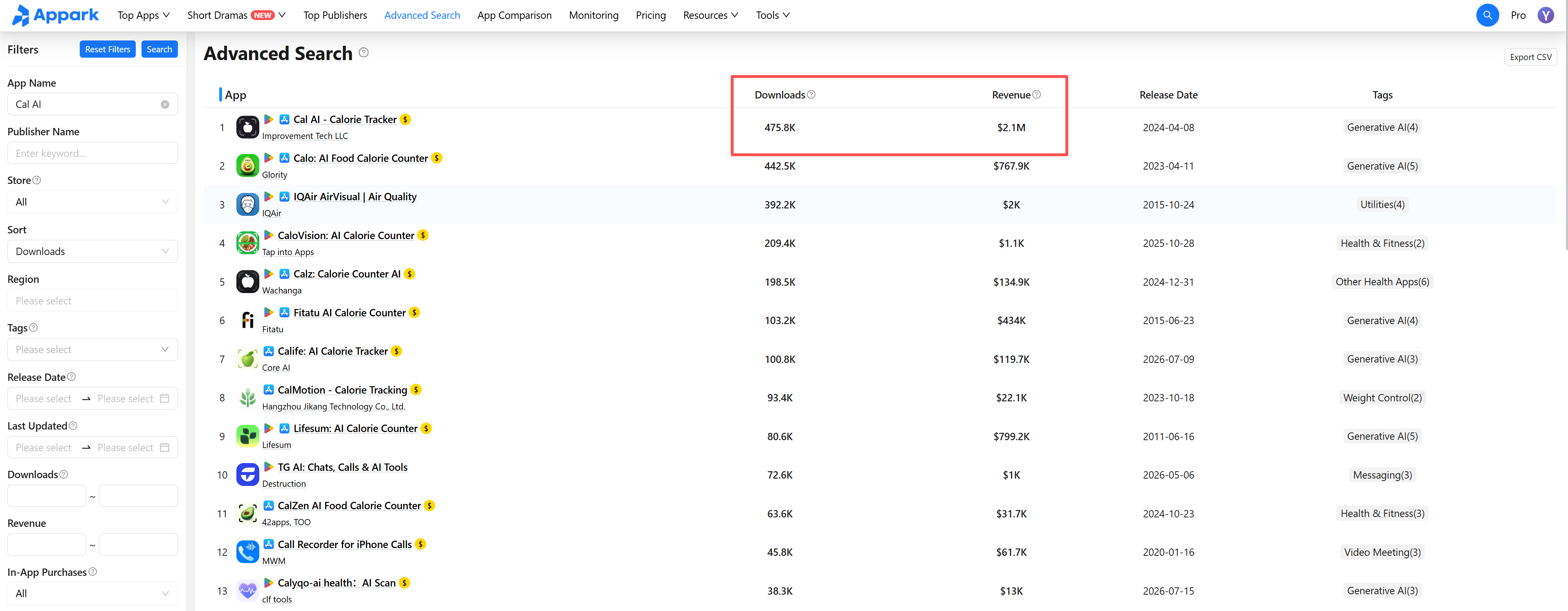
- The data: Single-workflow AI apps like Cal AI - Calorie Tracker (launched in 2024) pull an estimated 475.8K downloads and $2.1M in monthly revenue across iOS and Android — store chart estimates, October 2026.
- Difficulty: Medium.
- Vibe code it with: Cursor or Claude Code.
Group C · Simple Games
Games are the loudest vibe coding success stories. SlapMac, a laptop-slapping novelty app, did a self-reported $5,000 in its first three days, which still surprises me. The quiet truth: most simple games earn through volume and ads, not virality. For vibe coding game ideas, keep it single-mechanic. Build them because they're fun and cheap to ship, then price them like the simple-game monetization models we've broken down elsewhere.
8. Single-mechanic hyper-casual game
- The idea: One input, one loop, one score. Tap timing, one-button drift.
- Why now: 2D single-mechanic games sit in AI tools' reliable zone: simple physics, no netcode. And ad monetization means downloads pay even without purchases.
- The data: Proven single-mechanic games like Crossy Road still hold an estimated 768.2K downloads and $32.1K in monthly in-app revenue across iOS and Android — volume that ad monetization turns into a durable revenue stream — store chart estimates, October 2026.
- Difficulty: Medium.
- Vibe code it with: Replit or Base44.
9. Niche trivia game (one fandom, one profession)
- The idea: Trivia for one universe: one game franchise, one certification exam, or one community topic. The questions are the moat.
- Why now: Trivia players binge by topic. Deep question banks in one niche beat shallow ones in fifty.
- The data: Newer single-topic trivia titles like Bible Trivia - Bible Quiz Game (launched late 2024) already pull an estimated 86.4K downloads and $2K in monthly store revenue across iOS and Android, on top of ad impressions — store chart estimates, October 2026.
- Difficulty: Easy-Medium.
- Vibe code it with: Lovable or Bolt. Generate the question bank in a chat model and hand-check it.
Group D · Local-Business and Home-Cooked Apps
The lowest-glamour, highest-certainty group in vibe coding. Forget startup-scale business ideas. These pay this month. One r/vibecoding builder described the model plainly: he built a booking app for his local gym, and they pay him $50 a month to host it. That's not a lottery ticket. That's an invoice.
10. Booking micro-app for one local business
- The idea: A booking or scheduling app for a single gym, salon, or tutor. Not scheduling software. One client's tool, built and billed like a service.
- Why now: Small businesses hate their booking tools and won't pay $300 a month for a platform. They will happily pay a local person $50–$100 a month for something simple that works. (Client fees self-reported from community posts; retention is verifiable, because you know the client.)
- The data: Even in the public app stores, vertical booking apps show massive revenue per user — Goldie: Schedule Appointments pulls just 2.2K downloads a month across iOS and Android, yet generates an estimated $387.2K in monthly revenue — store chart estimates, October 2026.
- Difficulty: Easy.
- Vibe code it with: Lovable. Booking flows are its home turf.
11. Home-cooked software, gone public
- The idea: Build the tool you personally need, use it weekly, then put it in the store. The 85K-user weather-layers app started exactly this way.
- Why now: The HN crowd calls this "home-cooked software," and it's their consensus best use of vibe coding. You're user #1, so the product starts validated.
- The data: Indie personal-habit tools that started with a single everyday need can scale far beyond expectations — Water tracker Waterllama pulls an estimated 125.6K downloads and $113.6K a month on the App Store alone — store chart estimates, October 2026.
- Difficulty: Easy.
- Vibe code it with: Whatever you already use.
12. Field-service job tracker
- The idea: Before/after job logs for one trade: dog walkers, cleaners, contractors. Photos, notes, timestamps, done.
- Why now: Field workers juggle photos in their camera roll and details in their heads. A narrow log tool is a real $5–$10/month product.
- The data: Photo-first field documentation tools like CompanyCam pull an estimated 31.4K downloads and $49.2K a month on the App Store (plus 13.8K downloads and $1.1K on Google Play) — store chart estimates, October 2026.
- Difficulty: Easy.
- Vibe code it with: Lovable or Replit.
Validate Any Idea in Four Steps (Before You Write a Prompt)
Pick a vibe coding idea that survived the gut check? Good. Spend one hour on this before touching a builder:
- Pull the category's download and revenue rankings. You want the download and revenue rankings for the niche, not just the #1 app. I pull these in Appark, because that's where the chart data lives, and it takes about two minutes.
- Read the trend direction. Six months of downloads or revenue, flat or rising. If the line's falling, walk away, no matter how pretty the ideas look.
- Check how the leaders monetize. Subscription, one-time, ads? Match the market's expectation. If the top three are free-with-ads, a $4.99 upfront app is fighting gravity.
- Narrow to an intersection. The money hides where two narrow things cross: "sleep" × "green noise," "booking" × "one gym." Broad categories belong to companies. Intersections belong to you.
Worked example. When I pulled the ambient-sound corner of the App Store for idea #2 in October 2026, an indie app like Dark Noise: Ambient Sounds was holding 2.1K downloads and $1.1K a month on iOS alone, while broader sleep-audio leaders like Sleepiest pulled 20.4K downloads and $82.8K a month — clear payment evidence, found in two minutes, before a single prompt was written.
For the full validation workflow, including how to size revenue and test demand before committing, we've got a complete app market research guide.
The lawyer with the calendar app skipped this. His app works. His marketing, by his own admission, doesn't. Validation is the step that catches "works fine, nobody wants it" while it still costs you an hour instead of a quarter.
Which Tool Should You Build Each Idea With?
The best IDE for vibe coding depends on what you're building, not on which one has the loudest fans:
| Idea type | Best fit | Why |
|---|---|---|
| Group A utilities | Lovable, Bolt | Fast UI, one-flow apps |
| Group B vertical AI | Cursor, Claude Code | API work and iteration get serious |
| Group C games | Replit, Base44 | Game scaffolding and quick deploys |
| Group D local apps | Lovable | Booking flows and forms |
Every one of these has a free tier, and every free tier is measured differently. Build credits, tokens, messages. That's where people get surprised, so we track the current free vibe coding tool limits here, checked against official pricing pages.
How to Make Money With a Vibe Coded App
Four monetization models, each anchored to one of the vibe coding ideas above:
- One-time purchase: niche converters and trade calculators (Group A). Simple, honest, matches a "solve this today" job.
- Subscription: sleep apps, checklists, vertical AI (Groups A/B). Price against the category leader, not your costs; the market already voted on what's normal.
- Ads: simple games (Group C). Volume game: downloads × ad revenue, which is why the data field matters more here than anywhere.
- Client fee + monthly retainer: local-business apps (Group D). One client, one invoice, zero App Store dependence. Boring and beautiful.
One note on the research side of pricing: the app data world runs freemium too. Appark's free tier covers the core chart research and paid plans unlock more data, so you can validate an idea before spending anything. And once you've launched, monitor the competitors you found in step 3 above; their pricing changes are your pricing signals.
Frequently Asked Questions
Are there vibe coding ideas that don't require a paid subscription?
Yes. The ideas themselves are free; your costs are the AI tool and your research. Free tiers on Lovable, Bolt, and Replit cover a first version, and free chart data covers basic validation. The subscription question is really about scale: free gets you to a shipped v1 and a validated idea, not to a business.
Which IDE is best for vibe coding?
Depends on the job. For UI-first apps (utilities, booking tools), Lovable or Bolt. For AI-heavy apps, Cursor or Claude Code. For games, Replit or Base44. If you'll work offline or fear hitting credits, local tools like Cline are the move. See our full free vibe coding tool limits comparison.
How do I validate a vibe coding idea before building it?
Run the four steps above: category download and revenue rankings, six-month trend direction, leaders' monetization models, then narrow to a niche intersection. Budget an hour. If the category's falling or nobody pays for anything adjacent, kill it and pick the next one. The list is long on purpose.
Can a beginner actually make money with vibe coding?
Most don't. Vibe coding community threads are full of working apps with a handful of users. The two factors that separate the earners: they pick ideas with payment evidence already in the data, and they market to a niche they can actually reach. Build either of those into your plan or you're gambling, not building.
How much does it cost to vibe code an app?
Typical stack: $0 on free tiers for a first version, $20–$50 a month once you outgrow them, plus $99 a year for Apple's developer program if you publish to the App Store. A validated one-weekend utility app can clear its costs with a handful of sales; the tool-by-tool cost breakdown has the specifics.
Sources and Method
- Download and revenue figures marked "store chart estimates" come from public App Store and Google Play ranking data pulled via Appark for October 2026. Figures marked "self-reported" come from founder posts and podcasts and could not be independently verified.
- Community evidence: Ask HN: impressive vibe coding projects, r/vibecoding project-idea thread.
- Case sources: Lenny's "What people are vibe coding", The Side Hustle Show #743: $1,000/month with simple vibe-coded apps, ziplines' vibe coding examples roundup.
- Idea-selection criteria adapted from the unbundling method described in the Side Hustle Show episode and the payment-evidence framework in our app market research guide.
Numbers go stale in this space. We re-check the chart pulls regularly, and when a category shifts, so does this list. That's the difference between a list of vibe coding ideas and a list of guesses: the ideas above earn their spot with data, and you can re-run every check yourself in Appark before you build.