


5 Best App Market Research Tools for Indie Developers (2026)
Finding reliable app market data in 2026 is harder than ever for indie developers. Most enterprise platforms are built for large publishers with expensive subscriptions, while smaller teams often struggle to access competitor insights and ranking history without hitting aggressive paywalls.
Without reliable market visibility, developers often rely on guesswork when choosing categories, features, or competitors — and poor market decisions can waste months of development time.
For developers looking for lightweight competitor tracking and ranking analysis, tools like Appark.ai, AppMagic, and Appfigures provide accessible ways to monitor app markets without enterprise-level budgets.
This guide compares five popular app market research tools based on ranking history, competitor monitoring, market visibility, and free-tier usability.
5 Excellent App Market Research Tools Compared
1. Appark.ai — Best for App Rankings & Competitor Tracking
Appark.ai focuses on app revenue rankings, publisher insights, ranking history, and competitor tracking for indie developers and small teams.
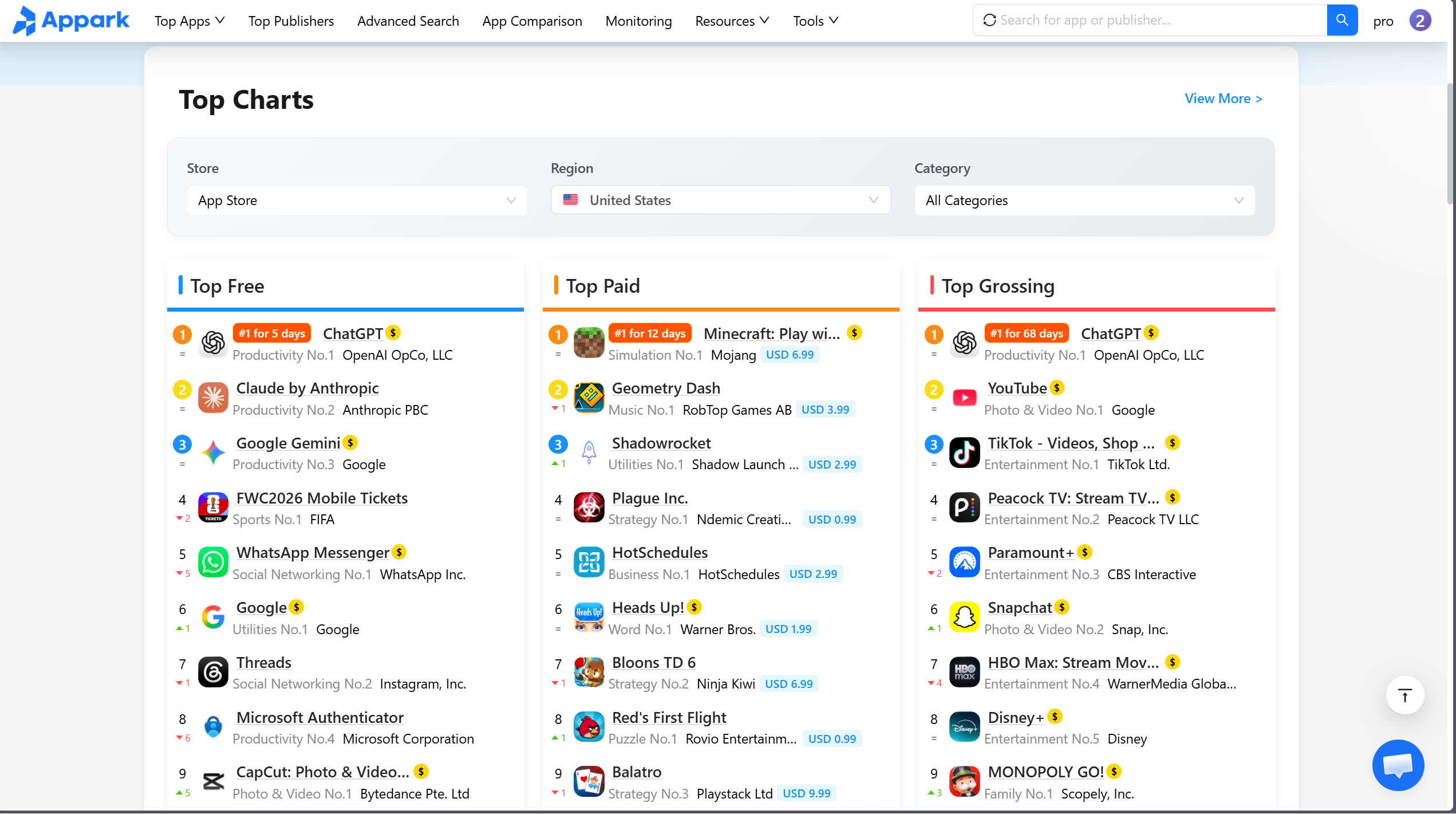
Users can browse free, paid, and top-grossing charts while filtering by country, category, and platform. The platform also provides historical ranking data through its app ranking tracker, helping developers identify long-term growth trends instead of only checking current positions during app market research.
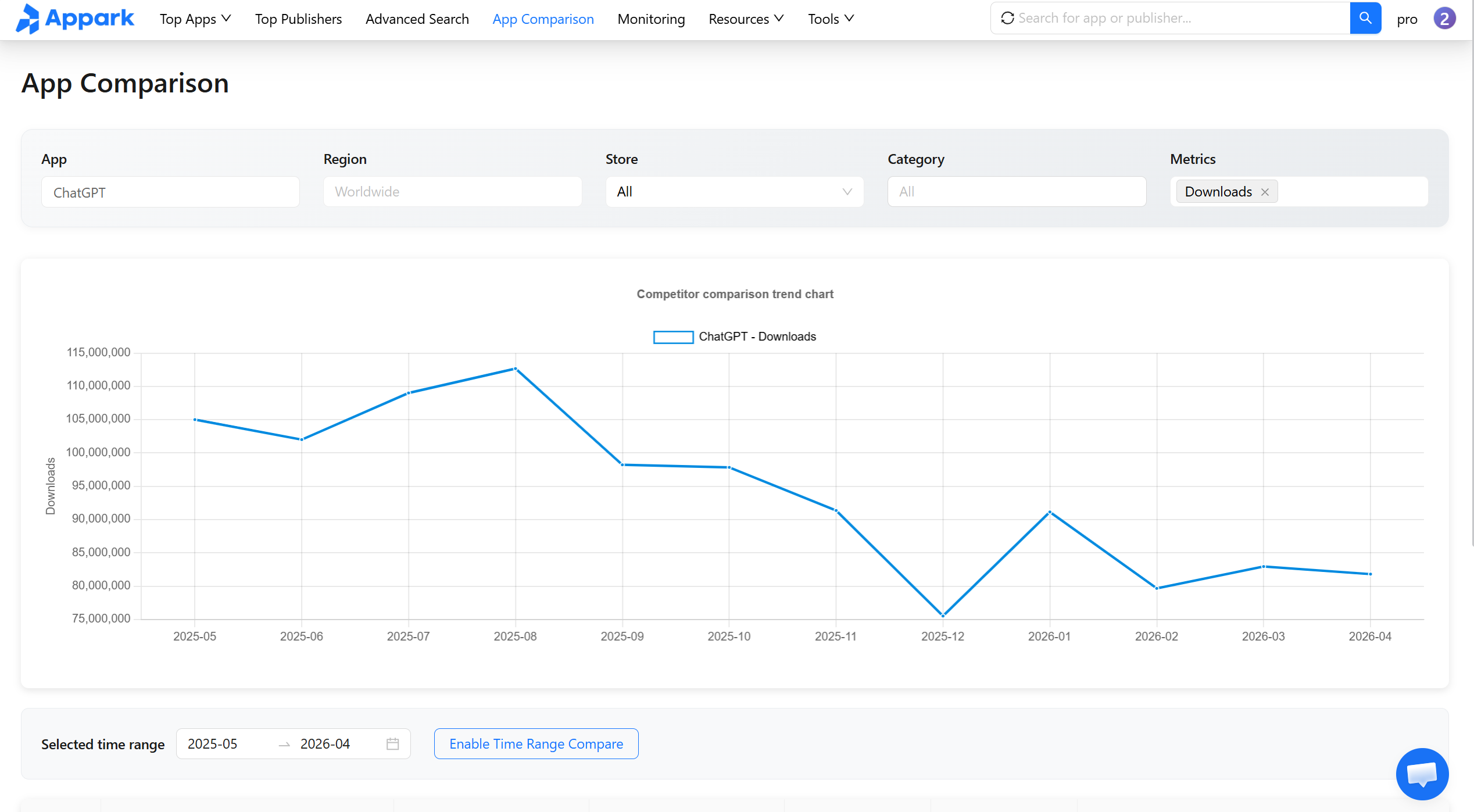
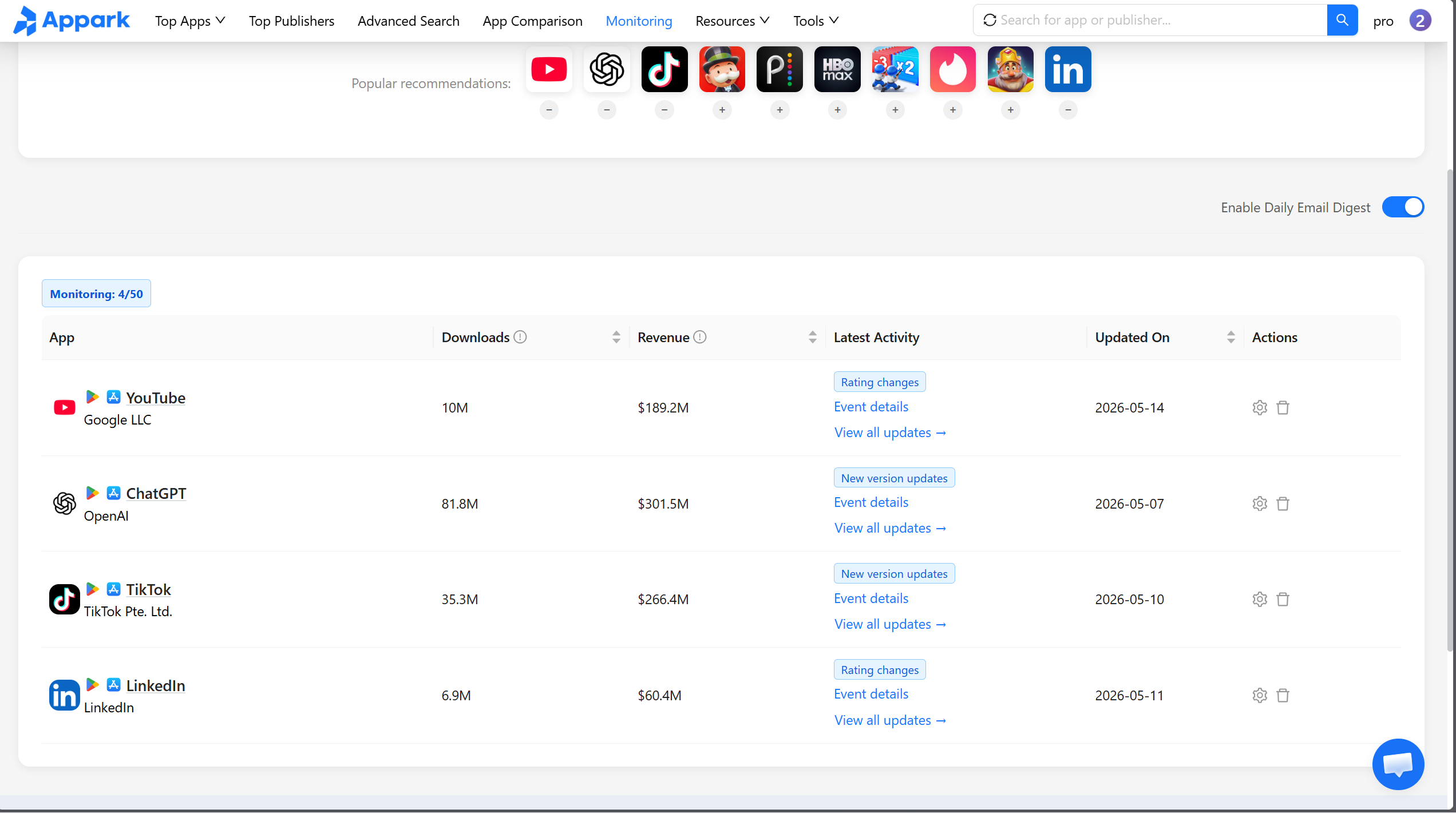
Appark also includes competitor monitoring and an Advanced App Finder for discovering smaller or fast-growing apps through detailed filters. This makes the platform useful for ongoing app market research workflows.
What You Get for Free:
- Download & Revenue Ranking
- Publisher Ranking
- Advanced App Search
- Competitor Monitoring
- Historical Ranking Tracking
The Limitation:
- No ASO keyword optimization features
- No advanced ad intelligence tools yet
2. AppMagic — Best for Revenue & Download Estimates
AppMagic is widely used for mobile revenue and download estimation, especially in gaming-related categories.
The platform provides access to top-chart data and quick revenue estimates for popular apps. Its interface is clean and beginner-friendly, making it useful for fast app market research and early market validation.
What You Get for Free:
Top-chart access
Basic revenue estimates
Download estimation previews
Category exploration tools
The Limitation:
- Historical analysis is restricted
- Advanced competitor research requires paid plans
- Niche market filtering is limited in free tier
3. Appfigures — Best for Daily Rank Tracking
Appfigures focuses heavily on leaderboard movement and app visibility tracking across multiple countries and categories.
Its dashboard is lightweight and easy to navigate. Developers can quickly monitor ranking shifts and compare app visibility trends across regions during app market research.
What You Get for Free:
Daily ranking tracking
Category movement monitoring
Multi-country visibility tracking
Basic app performance insights
The Limitation:
- Competitor analysis is restricted
- Advanced analytics require upgrades
- Free tracking capacity is limited
4. ASOMobile — Best for Quick Keyword Checks
ASOMobile combines lightweight app analytics with simple keyword research functionality.
The platform works well for quick metadata checks and single-keyword analysis. It is more ASO-oriented than most tools in this list.
What You Get for Free:
Keyword popularity checks
Metadata analysis tools
Basic app store insights
Simple keyword comparison features
The Limitation:
- Frequent paywall interruptions
- Limited research workflow depth
- Advanced tools are quickly locked
5. Sensor Tower — Best for Enterprise Market Intelligence
Sensor Tower is one of the best-known mobile intelligence platforms used by publishers, agencies, and enterprise research teams.
The platform provides broad market coverage, including rankings, revenue intelligence, and ad-related insights across global app stores.
What You Get for Free:
Public leaderboard browsing
Limited market visibility tools
Basic top-chart exploration
High-level category insights
The Limitation:
- Most competitor intelligence requires enterprise plans
- Advanced workflows are heavily restricted
- Pricing is not indie-friendly
Side-by-Side Comparison Table
| Tool Name | Download & Revenue Rankings | Advanced Search | Competitor Tracking | Best Use Case |
|---|---|---|---|---|
| Appark.ai | Yes | Yes | Yes | Competitor tracking |
| AppMagic | Yes | Partial | Partial | Market validation |
| Appfigures | Yes | Limited | Limited | Daily leaderboard tracking |
| ASOMobile | Limited | Basic | No | Quick ASO checks |
| Sensor Tower | Yes | Yes | Enterprise Only | Enterprise research |
How Indie Developers Actually Do App Market Research?
Effective app market research usually combines competitor tracking, ranking analysis, and long-term market visibility.
Step 1: Discover Smaller Competitors
Many indie developers avoid focusing only on top-chart apps. Instead, they look for smaller products with stable ranking growth. These apps are often easier to analyze because their strategies are still evolving during app market research.
Step 2: Monitor Ranking Trends Over Time
A single ranking snapshot rarely explains the full market picture. Long-term trend tracking helps developers identify whether competitors are consistently growing or only experiencing temporary spikes.
This process is commonly used in app market research and competitor analysis workflows.
Step 3: Analyze Product Positioning
Developers can compare onboarding flows, screenshots, feature positioning, and target audiences across competing apps. This often reveals overlooked differentiation opportunities during app market research.
Step 4: Track Competitor Updates
Watching how frequently competitors update their products can reveal priorities, roadmap direction, and user engagement strategies.
Step 5: Identify Untapped Market Gaps
By comparing multiple apps together, developers can often spot underserved features or user segments that larger competitors are ignoring.
This is one of the core workflows in modern app market research.
Frequently Asked Questions
1. What is the best app market research tool for indie developers?
Different tools fit different workflows. Some are better for competitor tracking, while others focus more on revenue estimates, ranking visibility, or market intelligence.
2. What metrics matter most in app market research?
Developers usually focus on ranking trends, download estimates, revenue growth, competitor visibility, and category performance. These metrics help identify market demand and growth opportunities.
3. Which tool is best for developers with a limited budget?
For indie developers, platforms with lightweight free tiers and fewer workflow restrictions — including tools like Appark.ai — are often more practical than enterprise-focused solutions.
4. How do app market research tools work?
Most app market research tools collect ranking, visibility, download, revenue, and competitor data from app stores, helping developers analyze market trends more efficiently.
5. Are app download and revenue estimates accurate?
Most platforms provide estimated market data rather than official numbers. While the data is rarely exact, it is usually useful for identifying trends, competitor growth, and market opportunities.
Final Verdict
Different app market research tools solve different problems. Some are better for revenue analysis, while others focus more on rankings, competitor tracking, or market visibility.
For indie developers and small teams, free-tier platforms can still provide meaningful insights without requiring enterprise-level budgets. Choosing the right tool depends on which workflow matters most to your product stage.
If you want to simplify app market research without relying on expensive enterprise platforms, lightweight tools like Appark.ai can be a practical starting point for competitor tracking and long-term market monitoring.